Thursday, August 27, 2009

Kim Kardashian's Going to Show us all what PR Really Is.


Previously, I blogged about the presence of PR in reality TV.

In an update to that post, People.com has announced Kardashian's newest project, a reality show focused on public relations. The show will be focused around her friends in the industry, "PR gurus Jonathan Cheban and Simon Huck" of Command PR.

"It'll show all the ins-and-outs or PR. It's going to be really fun. It'll show how there's lots of drama and crisis in the PR world."

Now granted, I have not seen the show, therefore I can not judge thus far. However, I will say why this makes me nervous. So far PR has a Hollywood reputation of being a job in which publicists help celebrities clean up messes. Although I have a deep respect for those in entertainment public relations (it's a tough and 24/7 type job!), there's just a lot more to PR.

Celebrity publicity is just one small facet of public relations. Among the intricacies of the public relations profession are creating press releases, organizing media, strategies of product releases, fostering relationships, facilitating business to business relations, and more. PR professionals can specialize in consumer marketing, manufacturing technology, agriculture, investor relations, and digital media. Each of these practice areas differ from each other in some ways, and are equally challenging in their own right.

The sad thing is, none of this can be conveyed through a half-hour television show no matter how well produced. It took me four years of college, and 5 internships to begin to grasp what PR fully entails. It would be wonderful to see a show attempt to expose the real world of PR. And in the end, it wouldn't really make for good entertainment (credit to my first commenter for this modification, as it's so very true).

Again, this is my opinion. But...If you listen really closely, you can hear a collective sigh among many PR professionals everywhere.

Tuesday, August 25, 2009

It Slices, It Dices, it does it all! It's TWITTER!

Recently I had the pleasure of discussing the uses of Twitter in public relations with other professionals. Twitter is "a new and exciting tool" that I'm sure most of you are all sick to death of hearing about. But despite all the hype, I really do believe in the value of Twitter in public relations.

It's really a tough sell to most. I've heard, "It's so overwhelming, I can't keep up with this!" and "It's just a bunch of mindless chatter, who cares what you think of Brett Favre joining the Vikings!" and "This will never catch on." These are all very valid arguments. But in public relations, Twitter is quickly becoming an important conduit to creating relationships with clients and networking with journalists.

One great question that was asked recently was "What if my clients aren't on Twitter? Then it doesn't really apply to me!" True, Twitter is making strides in B2B marketing and consumer marketing every day. Box office hits are even being attributed to whether or not the movie got good Tweet reviews. But, Twitter really relies on being a 2-way communications tool, and if your client isn't hopping on the trend, it's tough to justify the jump onto Twitter. Or so I thought.

But then, I found #agchat and I changed my mind.


I am already a participator in #journchat- a weekly conversation on Twitter between bloggers, journalists, and PR professionals. The weekly chat has already helped me do my job better- by letting me gain insight into journalist perspectives and network with journalists and PR professsionals. I never realized there were more #chat's out there until I stumbled upon #agchat.

#agchat is another weekly conversation (founded by agricultural advocate Michele Payn-Knoper) among agriculture marketing professionals and those in the agriculture business.

It occurred to me that even though your specific client may not be on Twitter, there are those out there (such as the participators in #agchat) who can give you valuable insights into your industry. Learning first hand information from professionals in your industry is ALWAYS a way to improve in your career and to improve your work for clients no matter how old you are or what industry you serve.

So, IHF Twitter for once again providing me with ways to conduct PR in a more effective way.

Monday, August 10, 2009

Innovative Facebook Photo Use - Koo Koo Kamera

I was creepin' out on Facebook the other night and checked up on the profile of Neil's band, Koo Koo Kangaroo. I've known Neil since I was in middle school and it's great to see him rockin' the Minneapolis music scene. I know Neil and Bryan appear to have several screws loose, but they're actually really smart. Neil has been promoting bands off and on for 5 years and is trying new things to connect with fans through Facebook and Twitter. Anyways, I was looking at some of the new photos that were posted from the video shoot and show on Friday when I noticed several albums titled Koo Koo KAMERA.

What is Koo Koo KAMERA?

At every show they boys set up a Macbook near the merch table. Fans at the show can take photos of themselves with their friends, strangers or the band using the Photobooth app. Neil creates Facebook albums of the photos as soon as he can after the show. Fans are eager to check the photo albums the next day to find their photo and tag themselves, adding a little social currency to their "photos tagged of" section. As fans rack up tagged photos for each show they attend they can compete with other fans for the most tags. It's also great organic promotion for the band as people exposed to fan networks will see updates about their friends being tagged in a Koo Koo KAMERA album.

OMG that man has a donut and Hey! That's my sister with Neil's siblings on the right!

Why it's great and what it means for brands.

When people are out with their friends and cameras are involved, I'll bet you five beers that you'll likely hear "omg that's my new profile pic", or "don't you dare put that on Facebook", or even "that's totally gonna be the name of my next FB album," Tagging your friends in photos keeps the shared experience going, even after the hangover fades.

While Koo Koo is operating as an open Facebook Profile instead of a Page, this fun use of albums can still be used with Pages. Finding a unique way to use existing features of social sites can be challenging, but giving fans the ability to interact with your brand without having to add another application will make life easier. Another example is Modern Amusement's use of the Like feature - Libby recapped the contest last week.

Creating strong offline/online connections is key for cohesive branding and specific campaigns. Keeping the photo concept in mind, brands could implement the photobooth self tagging concept at events or to enhance in-store experiences. Or integrate product photobooth to share your in-store purchase or to tag them for online purchase at a later date. Real time photo tagging can also be used with TwitPic to give fans the instantaneous credibility of being present at exclusive locations. These photo proof points are a win-win for fans and brands as the connection lives on the can't-live-without photo application.

Sunday, August 2, 2009

Review of Groundswell: Winning in a World Transformed by Social Technologies

Any book with "winning" in the subtitle is off to a good start for me. Groundswell didn't disappoint. If I ever write a book, it will be laid out like this--straightforward, parallel structures and packed with powerful case studies and numbers.

Groundswell (by then-Forrester researchers Charlene Li and Josh Bernoff) is divided into three sections. First the idea of "groundswell" and prominent tools like YouTube, Facebook, and Twitter are defined. More importantly, the book introduces and defines technographics and their tool for measuring how different groups of consumers use social media. See the free profile tool which lets you specify age and country here. The next section explains how to tap into the groundswell and make it work for your company. There are five ways that they categorize involvement, each building on the one before:

  1. Listening. Monitor the groundswell for research and to gauge overall sentiment about your brand and competitors. It's a free, always-on, completely honest focus group; you just need to know where to find it.
  2. Talking. Use the groundswell to spread marketing messages.
  3. Energizing. Turn brand enthusiasts into brand ambassadors.
  4. Supporting. Best suited for complex brands. Mobilize your customers into a support group for one another.
  5. Embracing. Bring your customers and their needs, wants, and ideas into your brand. Let them directly help you in improving your product, services, and marketing.
This section is filled with amazing case studies and action items for brands who want to get involved in these ways. The final section helps you implement groundswell techniques within your company. I recommend partnering that section with Tribes for full effect.

I also suggest having a highlighter and notepad handy while you devour this book. It's an easy read but it's saturated with statistics, tips, and sites to visit later. The only downside? The book was finished in late 2007 and published in 2008--in other words, pre-Twitter. To their credit, the authors cite Twitter as an emerging tool that they think will really explode into the groundswell. More importantly, they maintain a blog on the Forrester site to keep the conversation going and apply the content to modern case studies.

Bottom line: Read this book now, no matter what level of understanding you have of social media. Until you can get your hands on it, read the blog. Your co-workers will thank you when someone in the room can be truly knowledgeable about social media, and your brands will thank you when you approach them about entering or improving their presence in this brave new world.

Wednesday, July 29, 2009

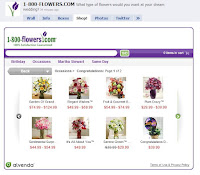
1-800-FLOWERS.com Facebook Store

1-800-FLOWERS.com just launched their Facebook storefront which eliminates extra steps in the buying process and makes it slightly easier to make up for the drunken post to your ex's wall last weekend.

Users can search through all products and order directly from the Shop! tab. Wasn't anticipating 1-800-FLOWERS.com to be a leader in Facebook ecommerce activity, but maybe this will help them get their act together to combat all the "I Hate 1-800-FLOWERS" groups.


Tuesday, July 28, 2009

Brand Inspiration From Columbus, Ohio

I’m always on the lookout for inspirational thinking, brands and ways of connecting people to make my job, life and my shared experiences better. I came across a few wonderful examples this weekend while I was exploring Columbus, Ohio.

Let your people be part of the brand. I stumbled upon Paul Robinett, a tiny aroma therapy candle shop, and the storefront window sealed the deal for getting me into the store. The giant Polaroid photos of customers sharing their excitement and store experiences helped me understand what this super simple store was all about. The minimalistic brand was brought to life through the quotes and smiles of its customers. Now only if I could have gotten my face in the window!

Create shared experiences. The Columbus Museum of Art had a fantastic George Tooker exhibit that included opportunities for visitors to share thoughts about a specific painting or theme represented in the work. Art museums are often experienced in silence while each visitors creates their own story about the work presented before them. These exhibit extensions invited people to share their thoughts and it was refreshing to see similar interpretations and ones I'd never think of, even after seven beers. Even though I was alone in the room, I felt like I shared an experience with everyone that posted their stories on the wall and in the book.

Inspire passionate fans. I had never been to Columbus. I had no idea what I was in for. But the one thing that I'll never forget is how excited everyone was about their city. The people I met were eager to to share secrets of the city, local hotspots and their opinion on the best neighborhood. The community was full of passionate residents that truly care about investing in the city and foster its growth. These Columbus advocates had a much larger impact on my view of the city than the sights and shops.

The most authentic experiences are rarely brand related, but they always help to remember that I should strive to work harder to create work that is geniune.

There's that word again.... VIRAL

With YouTube videos like the recently popular St. Paul Wedding Entrance (over 9 million views!) exploding into VIRAL status, it's no wonder communications clients are clamoring to create their own viral videos. Nine million views? That's a HUGE measure. In digital content such as social media it can sometimes be hard to measure the return on investment, which is why viral videos are so appealing to communications clients.

Viral videos can't be created out of thin air, however. Local video expert Jake Nyberg states in WCCO's recent Good Question segment, "I often tell people who want to go viral: viral is not a strategy, it's an outcome. Can you make a good attempt? Certainly." Nyberg is a partner at Three Volts, a Minneapolis video production and marketing firm, and has been enlisted to create many of these attempts in his career.

Nyberg makes a great point, viral isn't a strategy. Often, people assume slapping a branded video together and uploading it to YouTube makes it "viral." In fact, viral can't be promised to any client. Libby Issendorf put it this way: "I still use the word viral, but I'm careful to say it 'could have viral potential'"

That's not to say we in the communications biz should stop trying. "You have to do something authentic that you had no intention of going viral," Nyberg said in his WCCO interview, and it's good advice. Online video can be great exposure to a brand, even without the viral status. And every so often, a viral attempt succeeds.

But we have to realize that in the end, we might get outshined by videos that are very real and human, and tug at the heartstrings ever so slightly.

Careful What You Tweet

http://thetwittersecret.com/blog/wp-content/uploads/2009/05/twitter-bird-6.png
A story recently posted on Mashable today, discussed the young woman being sued $50,000 for libel- via Twitter! The suit is being filed by Horizon Realty against Amanda Bonnen for disparaging their company on Twitter. Keep in mind this women tweets every few days and had (page was removed) about 20 followers. Here is the Tweet in question:

“Who said sleeping in a moldy apartment was bad for you? Horizon realty thinks it’s okay.”

I believe that companies can truly improve their practices through things their customers post on Twitter, and other social sites. Just think if Comcast tried to sue everyone who ever said anything bad about their company via Twitter, insanity would ensue. Good thing they didn't.

I can see how Horizon Realty would be peeved that a customer was on Twitter bashing their company. Just like I'm sure Amanda was when Horizon allegedly ignored her mold problem. However, their reaction to sue before warning does worse for their reputation than the Twitter post did.

If Horizon wins, could it be an indication of how Internet libel is handled in the future? Would this case change the way people use Twitter? The Internet?

Monday, July 27, 2009

Review of Tribes: We Need You To Lead Us

Last month I heard Sally Hogshead speak at an IPG Women’s Leadership Network event. She told a story about striking out on her own with her business partner and starting their own agency. They were signing the lease on their office, a 12-month contract that finally made everything real, when her business partner turned to her. He said, “You know the way you’re feeling right now, the nerves and excitement and fear in the pit of your stomach? That’s risk. It's not necessarily bad, and you shouldn’t be afraid of it, but you need to be able to recognize it. You're going to be feeling it a lot more.” Seth Godin must be quite familiar with that feeling, because his book is all about taking a deep breath and doing something terrifying because you believe in it.

Tribes made me nervous every time I picked it up. It doesn’t shout, but fervently whispers in your ear: Stop pushing papers. It’s 2009 and the world is changing. Go make the change you want to see. And before I could fully form all my logical objections—but I don’t have any money, it’s not that easy and no one will listen to me, everything is safe the way it is now—it has blazed through them by providing pages of examples of heretics who wanted change and got it.

Here’s a sampling of the best lessons learned:

If your organization requires success before commitment, it will never have either.

Find leaders (the heretics who are doing things differently and making change), and then amplify their work, give them a platform, and help them find followers—and things get better. They always get better.

This is what advertisers need to pay the most attention to. Find leaders, brand advocates, people with opinions, and fuel their fire. Conversely, don’t try to squelch the heretics. If you don’t amplify their leadership efforts, someone else will. You’ll be in trouble.

Marketers need to read Tribes to understand how to turn brand advocates into brand heroes. Junior-level employees need to read it to remind themselves of the passion they had in college when they dreamed of striking out and following their dreams. On the last page, Godin urges readers to pass the book along if we found it worthwhile. If you’re interested, I’d be happy to share my copy.

Friday, July 24, 2009

Libby Issendorf likes this: Modern Amusement

Remember when Erin and I yelled about social media not being an awareness driver? There are a few rare exceptions. One I'd like to highlight comes from apparel brand Modern Amusement. They're a relatively obscure (some might say hipster) brand looking to get their name out with, presumably, no budget. They asked existing Facebook fans to submit photos of them in Modern Amusement clothing. The photo with the most "Likes" wins. That's it. It requires minimal effort for existing fans (most already have a photo on their computer or on Facebook), it's dead simple for Modern Amusement to track the leaders, and it invites fans organically through their network.

For brands with huge awareness already, like Volkswagen or Starbucks, a contest like this might not invite the level of engagement they're seeking. These brands also have highly recognizable products that don't require an entire fan photo album to showcase. But for Modern Amusement, this is the perfect way to introduce themselves. Fans are basically building them a free catalog and endorsing it. When the contest is over, they should comment on these photos with Buy links to the merchandise in the photos, or tag them with the name of the clothing item.

And all you Yaybia readers should absolutely become fans of Modern Amusement and click "Like" on the photo of my co-worker Chase (the entry pictured here), who introduced me to the contest in the first place.

*Side note: Remember BMW films and how revolutionary it was to put VIDEO on the INTERNET? Moment of silence for Fallon's glory days.

Thursday, July 23, 2009

Ad Ed: Is a 4-Year Worth It?


Dan Goldgeier recently posted a piece asking, “Are you smarter than an ad student?” Being a recent college graduate in the field of strategic communication (fabulous timing, to be sure), I’ve found myself asking many of the same questions that Dan puts forward. Most importantly: did my advertising education prepare me for success in such a struggling industry?

To be fair, I cannot know the answer, as I am unfortunately part of the growing pack of the unemployed. (Or is that my answer?) However, looking toward my more blessed colleagues of the graduating class of 2009 in advertising, and by assessing what I feel I’ve learned from my college courses, I have come to a few conclusions about my experience with the state of advertising curriculum and its effectiveness.

*Note: I do give Dan an IHF for actively pursuing this topic for the right reasons. In the past few years, I have seen so many ad professionals pushing young ad students down to make themselves feel more important or skilled in the communications field. Dan, on the other hand, recognizes the fact that the advertising industry as a whole will continue to struggle if new talent isn’t taught what is necessary. (I’m not requesting hand-holding, only knowledge, thank you very much.)

Back to the issue.

Dan states, “Four-year colleges and universities do practically nothing to prepare students for a career in advertising, particularly as a creative.” I do agree with him on the creative standpoint. I studied at the University of Minnesota in hopes of becoming an art director, and I clearly remember being sat down by my Psychology of Advertising professor who told me, “You’re in the wrong place.” I was shocked, stunned, and a little angry at his statement, which I found harsh at the time. However, after a few more years of study, I would find that he was undeniably correct in his choice of words.

The University of Minnesota offered me a great education, and I would never claim otherwise. However, as a creative advertising student, the curriculum is lacking- to say the least. There are only 2 creative courses in our School of Journalism and Mass Communication: Creative Strategy and Copywriting (which is sort of a misnomer… as it also focuses on art direction and most other aspects of the creative process) and Advertising Portfolio Development. These classes are a great starting block for young creatives-to-be, but cannot teach them everything they need to know to be successful. Lack of classes isn’t to be blamed on the staff (many of them have begged time and time again for more creative courses), but rather on lack of funding. The J School has not had a full staff in a decade, and more courses would require more teachers, a luxury that the school cannot afford.

I do disagree, however, on Dan’s point that “Most of the professors at these schools have little in the way of relevant, recent industry experience, nor do they provide much insight into how today’s ad agencies work on a day-to-day basis.” I found, in my experience, my professors to be extremely relevant, qualified and insightful. (Let’s be honest- you can’t get much better than John Eighmey, Earl Herzog or Jennifer Johnson.) They didn’t try to force outdated textbooks on us or lecture all hour on worthless information. They engaged us to come up with solutions to the new problems that the industry is facing. (And BELIEVE ME… they DEFINITELY made sure we understood the inner-workings of agencies.)

In fact, Jennifer Johnson went out of her way to help me try to solve the lack of creative curriculum when we founded the University of Minnesota Student One Club, which provides students with an avenue for portfolio development and creative brainstorm outside of the classroom. Her dedication to her students is relentless, to say the least.

Later, Dan commented, “I cringe when ideas go to an Assistant Account Executive who doesn’t have an informed notion of what they’re helping to sell and who they’re selling to. It doesn’t benefit anyone to see a junior creative team present a wonderful, well-crafted idea that just happens to be the completely wrong tone for a target they can’t seem to relate to.”

To that point, I would argue that the HR people have obviously chosen the wrong account candidate in this situation. If there is anything stressed in our coursework at the J School, it’s research and strategy. Even though I was more focused on creative, I couldn’t help but be schooled in the teachings of knowing the target, what motivates them and how to display the value that the product/service can have in their lives. (Which, in my opinion, has made me a better creative as well.)

However, despite my belief in the strength of the U of M’s ad program, I have always said that I have learned more about advertising through the National Student Advertising Competition than I ever have in the classroom. To tirelessly work on a campaign for a year on your own time for no credit beyond the pride of knowing you did your best is really the way to know more about the industry and whether you’ve got what it takes. It also doesn’t hurt having a genius like Howard Liszt overseeing everything you do and giving you insights into what needs to be done. (Another phenomenal, RELEVANT teacher.) This is not to diminish the importance of my formal education, but rather to show another benefit of four-year education for ad students.

I did enjoy Dan’s final remark: “However, there is one skill they do learn at college: How to drink. And drinking skills can indeed get you far in advertising.”

Thank. God.

Sunday, July 19, 2009

New Ideas from the Music Industry

The music industry has been struggling to keep physical assets a part of their product offering - and with good reason. People like portability and files that are in a flexible format. However, the idea of having a tangible object to go with your tunes can still be a huge draw. Here's a quick lowdown on some new ideas from the music industry.

Upload your own music to Rock Band - MTV is plotting to launch a service called Rock Band Network to allow "any artist-unsigned emerging act, indie cult fave or major-label superstar-to submit songs for possible inclusion in the game." If all goes well with the indies, the platform can be opened up to bands already signed to major labels. Will Rock Band be the new sellout?

Mos Def's album as a tshirt - New tunes, threads and a little free promo. Fans that rock the tee with the album cover on the front and track listing on the back are able to download the album with the code printed on the tag. Not sure about you guys but I love sportin' tees of my fave bands so this is a great two-for-one.


Blink-182 and Big Boi / Doritos late night concert (augmented reality) - If you're still sober while noshing on your late night Doritos you can now check out exclusive footage of Blink or Big Boi. I can't say that I'm well versed with Big Boi's tunes, but Blink has been a long time favorite - you can see some documentary style details here. This promo is perfect timing for the Blink reunion and gets Doritos into the music scene. Viewers can also enter to win tickets for the summer tour.


Whether you're working with promotions, product development or trying to save the music industry, these three ideas can serve as a little inspirational thinking. The tracks themselves may still be downloaded, but the experience doesn't have to be completely digital.

Tuesday, July 14, 2009

Organized Live-Tweet Events - Saint Paul Saints!

While the NFL is cracking down on Twitter, the Saint Paul Saints are embracing Twitter and the social world with open arms. The Saints are asking players, coaches, fans and employees to join them in the Twitter-My-Face event on July 23rd.

This is the first organized live-tweet event that I've come across and I bet more will be popping up over the next few months. Check out the full details here, but the opening to the press release cracks me up! Cheers to their PR team!

"I woke up today at 6:30 a.m. (so tired), worked out (off to the gym!), took a shower while listening to the radio (don’t you love that new Jonas Brothers song?), ate breakfast (LOL @snapcracklepop), and am now writing this press release (#work)."

Anyone else see any real life + social events that are this organized?

Tuesday, July 7, 2009

Agencies on Twitter

http://www.kaspersorensen.com/wp-content/uploads/2009/01/twitter_bird_follow_me.jpg

Yesterday, Ad Age posted a controversial piece on the lackluster Twitter accounts from ad agencies. They pose the question: why would clients pay money to agencies to use Twitter, when they themselves can't seem to figure it out?

@greynyinterns got a slap on the wrist for releasing unauthorized content (clarification: I'm one of the "account interns" not part of the Twitter account). On the contrary, @cmithun got an IHF for being awesome. I think it's because Libby works there.

While the comments posed varying degrees of self promotion and intelligence, it seems as if everyone has an opinion on the subject. However most agencies (and companies) can't seem to figure out the questions: why are you here and who are you talking to?

To me, it seems the only reason I would follow an agency Twitter account is because I'd want a job there. I get my industry news, agency gossip, and new creative updates elsewhere. So what's the point of an agency even having a Twitter account? I'd rather hear from individuals working there, than the 140 characters that have to go through corporate.

Signed, Yaybia's First New York Correspondent

Monday, June 29, 2009

Minneapolis Boutique Shops FTW

Minneapolis boutique shops are getting some rockin' press this week. AdAge talks about the New Creative Order and the local Strib gives a hat tip to Ginger Consulting. Keep it up, guys!

Philips Tackles the Twitter Product Review

Forget Twitter (and other social spaces) and focus on product reviews? I'm not so sure. AdAge dropped this article over the weekend and while product reviews are undoubtedly a fantastic way to gain customer feedback, Twitter can be used to directly gain product feedback and in a much more creative way.

@PHILIPS_VS is a great example of a brand using 140 characters to directly ask consumers for ideas on new product features and how to test their current products. At www.philipsvs.com people can submit "140 characters of genius" and if Philips digs it, they'll make it happen. The contest started a little over a week ago and players with the best ideas will have a chance at winning a sexy big screen.

A major concern from retailers is that social conversations, notably the ones on Twitter, are not structured enough to extract the information needed to directly impact sales. In this case, Philips created their own structure for what would otherwise be chaos in comparison to traditional product reviews. From "I love five dollar footlongs" to "I hate Comcast", people are naturally sharing their opinions on Twitter and other social sites. Creating an avenue for the conversation will open the door for new product feedback that would might never be addressed via traditional product reviews.

IHF to @nguyenduong for the tip

Thursday, June 18, 2009

Q: What is a Broswer? A: No one cares

In their attempt to promote Chrome, Google has given us a great little video that is a nice reminder that the majority of people don't care about the technicalities of the Internet. People care about accessing their email, connecting with friends on their favorite social networks and accessing any piece of information they care to find. People are perfectly happy without knowing the exact definition of browser, why would they need to?


My Digital Media Resume

A conversation with the lovely Alicia led me to today's post topic. As we talked about gaining experience in our industry, and the fact that "new" media isn't really all that new to our generation, I began to think back to my own use of "new" media. For me, "new" media is actually quite old, and although it continues to evolve, I have evolved right along with it.

I learn, share, create, comment, discuss, and interact on a daily basis, and have been doing so since I was a little girl.

Below I've listed my "Digital Media Resume," to highlight major adoptions in digital media throughout my life. I would LOVE for others to share their resumes, so get to thinking!

Susan E. Garcia
Facebook.com/susan.e.garcia * twitter.com/suze_g * linkedin.com/in/susangarcia

Age 7
• Part of the Babysitters Club (book series) online newsletter (at the time, we had Prodigy as our internet service, which had all of 5 options).
Age 10
• Began using AOL games online.

Age 11
• First Hotmail account for email.
• Created MSN Messenger profile, began to use it religiously after school to connect with friends.

Age 13
• Began using free Web site service (can not remember the name!) to make “funny” sites among my group of middle-school friends. Features included taking polls, and posting glittery animated graphics (oddly enough of leprechauns and American flags).
• Began using online chat rooms with friends

Age 14
• New MSN Messenger profile includes adding your “interests, photos, favorite quotes” thus making updating that weekly the popular thing to do at Omro Middle School.
• Began chain e-mailing of surveys (i.e. “Pass this on to your friends and fill out about yourself)

Age 15
• Created Yahoo! messenger profile for brief stint.

Age 16
• Got first cell phone, downloaded personalized ringtones and wallpaper. Began texting.

Age 17
• Created a Xanga page (much like MySpace). Took down Xanga page one month later.
• Perfected the “texting during class without getting caught” skill.

Age 18
• Received camera phone, started texting photos.
• Used the Wisconsin State Track network RSS feed to check updates on regional athlete stats. • Applied to UW-Madison through a created online profile. Found out about my acceptance to UW-Madison online BEFORE receiving the official letter.
• Joined MySpace, began doing silly surveys about myself.
• Joined Facebook to “meet” my new roommate at University of Minnesota.

Age 19
• Maintained a MySpace and Facebook page. Used them to connect with new friends, stay in
touch with old friends.
• Created AIM profile to chat with new UMN friends.
• New .edu email for school. Included MyU online profile, e-grades, online classes, and Web
Vista for online homework. Could now monitor progress for classes all year long.

Age 20
• Mastered the Facebook “remove tag immediately because this picture makes me look
______” skill.
• Began to watch TV online (ABC.com), and used Fuse.tv online forums to find new music.
• Subscribed to the NYTimes podcast to listen to on the bus every morning.
• Used Facebook to update friends while in Washington DC for summer. Created group for the summer interns to organize get-togethers.
• Used Washingtonian.com blog to find new things to do.

Age 21
• Joined Google Reader to keep my RSS feeds in one place, and share with friends.
• Created GMail account, routed all email to one place, and started GChatting.
• Joined Twitter (@suze_g), began by tweeting insignificant observations.
• Began religiously following music blogs.
• Began use of Pandora.com, and Hulu.com
• Created Tumblr account to share art and music.
• Created the short-lived "OMG Remember This?" blog on Blogger with fellow intern, to speak to all things 90’s.
• Created LinkedIn profile. Connected with old and new colleagues.
• Created MNArtist.org profile for gallery I was interning for, to help it network with local artists.
• With my first Macbook, began to use iChat to consolidate all messaging services.
• Began regularly commenting on blogs.

Age 22
• Joined the fabulous YAYBIA! crew as a PR liaison.
• Created Muxtape mixtape.
• Began using Twitpic to tweet photos.
• Created new Tumblr to display my resume and writing samples.
• Became member of PR Open Mic, a public relations student network.
• Assisted in the creation of a highly interactive campaign for the 2008-09 NSAC team.
• At internship, pitched bloggers on a variety of subjects.
• Began social media monitoring for brands.
• Began using Twitter to share links, create conversation.
• Used LinkedIn to find entry-level job opportunities, and make and maintain connections in the PR industry.
• Became social media intern, and now eat/sleep/breathe social media daily.

Notable Skills:
YouTube watching and sharing, Google Mapping anything and everything, keeping my Google Reader at below 1000+ items, retweeting at least one link daily

I'm sure there are digital resumes that top this one, so hope you share! KTHXBAI!

Tuesday, June 16, 2009

Who You're Really Talking To

Christian at Idea Drunk shares this pearl of wisdom:
I’m not saying that it isn’t correct to have an aspirational target. I’m saying that you shouldn’t forget that the majority of [your target] doesn’t live in the city where you’re making your advertising. The majority of [your target] doesn’t frequent hipster bars on Ossington and shop at H&M. They drink beer at their campsites, shop at Wal-Mart and go to Boston Pizza for a nice meal. And sometimes, they have handlebar amazing moustaches.
Couldn't agree more. So often we are marketing to the people we'd like to buy our product, but we ignore the people who actually do. Fortunately, it's getting easier to identify our true fans.

Facebook Insights is now offering in-depth looks into the people who are using Pages and interacting with brands. Insights has been rolling out new metrics regularly, so I hope top interests and keywords will soon be a component of the analytics. In the meantime, why not take a random sample of Twitter followers and Facebook fans and figure out who's really listening to your messaging? If it's die-hards who will fight to the death about Pizza Hut vs. Domino's, offer incentives to share stories and media. If it's college kids looking to score coupons, show them some cheap pizza love. But figure out who you're talking to. It's never been easier to do it.

Monday, June 15, 2009

Twitterquette

So... I tweeted a link today to share a video with the Twitterverse, and one of my followers (who shall remain unnamed) shared the same link shortly after. Now, this is no newbie to Twitter. He/she knows the lingo. So why no RT @aliciahouselog? Is this just me being a snobby attention whore or is this bad Twitterquette?
When is it acceptable to ignore the RT? When is it vital to use the RT? I know I was probably not the ONLY person on the planet to share the video, but it was quite obvious that he/she was RTing my tweet. Thoughts?

(P.S. I would have accepted an IHF wholeheartedly.)
 
Real Time Web Analytics